


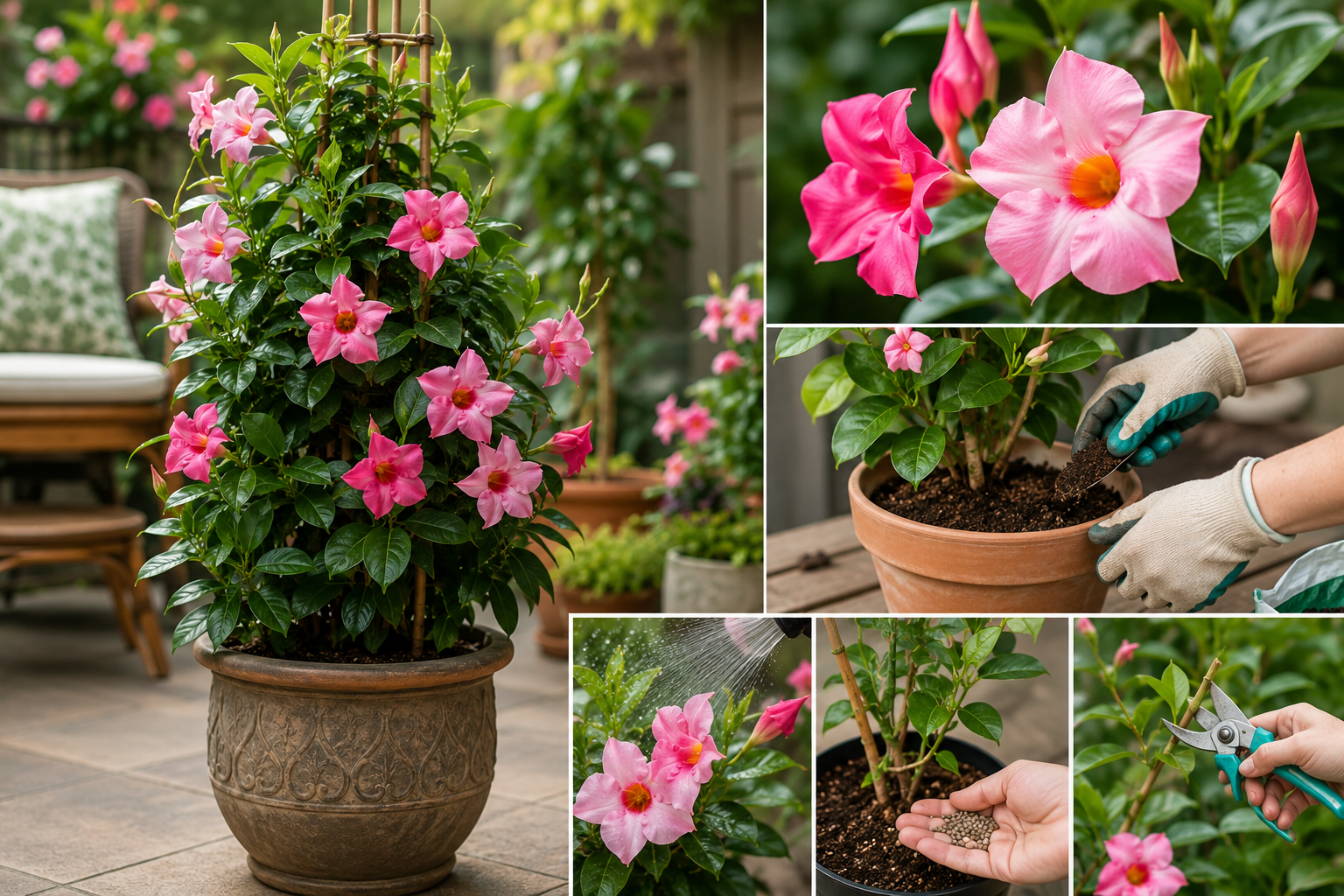
Mandevilla is one of the most rewarding flowering vines you can grow in a container. With its glossy green leaves and trumpet-shaped blooms in shades of red, pink, white, and deep crimson, it brings a tropical flair to patios, balconies, and entryways like few other plants can. The flowers are generous and long-lasting, often blooming from late spring all the way through the first frost.
But for all its beauty, mandevilla does ask something in return: consistency. Understanding mandevilla care in pots means learning to balance its love of warmth and sunshine with its need for well-draining soil, regular feeding, and the right amount of water. Get those basics right, and you’ll be rewarded with a vine that practically refuses to stop blooming.
This guide walks you through everything you need to know from choosing the right pot and soil mix to pruning, overwintering, and troubleshooting the most common problems.
What Is Mandevilla and Why Grow It in a Container
Mandevilla (formerly classified under the genus Dipladenia, though the two names are still often used interchangeably) is a fast-growing tropical vine native to Central and South America. In its natural habitat, it climbs trees and scrambles over rocky slopes, sometimes reaching 20 feet or more.
In most parts of North America and Europe, mandevilla is grown as an annual or overwintered indoors, since it’s only cold-hardy in USDA zones 9 through 11. That’s where container growing becomes the smartest approach. When you grow it in a pot, you can move the plant inside as temperatures drop in fall, protecting your investment and giving the plant another season or several of growth.
Beyond practicality, containers let you control the soil conditions and placement precisely. You decide exactly where the plant gets its sun, you control the drainage, and you can showcase the vine on a trellis, obelisk, or fence where it’ll become a true focal point.
Choosing the Right Container
Container size matters more with mandevilla than with many other plants. Too small and the roots get cramped quickly, leading to stunted growth and reduced flowering. Too large and the excess soil stays wet for too long, inviting root rot.
For a young plant, start with a 10- to 12-inch pot. As the vine grows and the root system expands usually after a season or two graduate up to a 14- or 16-inch container. A pot that’s two inches wider in diameter than the root ball is the general rule when repotting.
Material matters too. Terracotta pots breathe well and help prevent waterlogging, which suits mandevilla’s preferences perfectly. Plastic or glazed ceramic pots retain moisture longer, so you’d need to water a bit more carefully with those. Whatever material you choose, drainage holes at the bottom are non-negotiable. No exceptions. Choosing the right container is just one part of successful home gardening tips that help plants thrive in limited spaces.
Soil Mix: The Foundation of Healthy Growth
Mandevilla is not a fan of heavy, clay-like soil. It needs a mix that drains fast but still holds enough moisture and nutrients to support vigorous growth.
A reliable blend is two parts good-quality potting mix combined with one part perlite and a small handful of coarse sand. This creates a light, airy medium that prevents the roots from sitting in moisture while still giving them something to hold onto.
Avoid garden soil entirely when it comes to mandevilla care in pots. It compacts too easily in containers, restricts root development, and often carries pathogens that thrive in closed container environments.
Some gardeners add a slow-release granular fertilizer to the potting mix at planting time to give the vine an early nutritional boost. This is optional but helpful, especially if you’re not planning to start a liquid feeding routine right away.
Sunlight Requirements
This is where mandevilla is most uncompromising: it needs full sun. At least six hours of direct sunlight per day is the minimum. Eight hours is better. Ten is ideal during the growing season.
When a mandevilla doesn’t get enough light, the symptoms show up quickly stretched, leggy stems, pale green leaves, and a sharp drop in flower production. If your blooms have been sparse and you’ve been keeping the plant in part shade, moving it to a sunnier spot will likely make an immediate difference.
South- or west-facing walls, where heat and light accumulate through the afternoon, are excellent spots for container mandevilla. The extra warmth reflected off walls mimics the plant’s tropical origins and encourages more consistent flowering.
Watering: Getting the Balance Right
Proper watering is at the heart of good mandevilla care in pots. These plants are somewhat drought-tolerant once established, but they don’t thrive when left to dry out completely between waterings. At the same time, they’re highly susceptible to root rot if the soil stays soggy.
The standard approach is to water deeply and then wait until the top inch of soil feels dry before watering again. In peak summer heat, that might mean watering every other day. In cooler weather or early spring, once a week may be plenty.
When you water, do it thoroughly. Apply water until it drains freely from the bottom holes. This encourages deep root growth and flushes any salt buildup from fertilizers. Shallow watering just wetting the surface leads to shallow roots and a weaker plant overall.
Reduce watering significantly in winter if the plant is overwintering indoors. During dormancy or near-dormancy, the plant needs very little water, and overwatering during this period is one of the most common causes of plant death.
Feeding for Maximum Blooms
Mandevilla is a hungry feeder, and regular fertilization is what separates a plant with occasional flowers from one that blooms continuously for months on end.
During the growing season roughly April through September feed your plant every two weeks with a liquid fertilizer that’s higher in phosphorus than nitrogen. A balanced 10-20-10 or similar bloom-boosting formula works well. Phosphorus is the nutrient most directly responsible for flower production, so a formula leaning in that direction pays off in more blooms.
Avoid high-nitrogen fertilizers. Too much nitrogen pushes the plant to produce lush green foliage at the expense of flowers. It looks healthy but doesn’t bloom the way it should.
Taper off feeding in late September and stop entirely by October. As the plant prepares for winter and growth slows down, heavy feeding can actually stress it.
Supporting the Vine
Mandevilla is a twining vine, which means it wraps its stems around supports rather than using tendrils or adhesive pads. You need to give it something to climb, and early training pays off.
Insert a trellis, bamboo obelisk, or wire frame into the pot at planting time or shortly after. As new growth appears, gently guide the stems toward the support. Once they grab on, mandevilla grows with surprising speed, sometimes adding several inches per week in warm weather.
For a more compact, bushy look, some growers pinch the tips regularly rather than letting the plant climb freely. This encourages branching and can result in a fuller plant with more flowers along the lower stems.
Pruning: Why and When to Do It
Pruning is a key but sometimes overlooked part of mandevilla care in pots. Light pruning throughout the season keeps the plant tidy and promotes more blooms. Hard pruning is best done in late winter or early spring, before new growth begins.
When you prune, you stimulate the plant to push out new growth and new growth is exactly where mandevilla produces its flowers. Cutting back old, woody stems by a third to half their length in early spring leads to a much bushier, more floriferous plant through the summer.
Use clean, sharp pruning shears and wear gloves. The milky white sap that mandevilla releases when cut can irritate skin and cause mild reactions in sensitive individuals. The sap is also toxic if ingested, so keep the plant away from pets and children.
Overwintering Mandevilla Indoors
For gardeners in cooler climates, mandevilla care in pots includes an important fall ritual: bringing the plant inside before temperatures drop below 50°F (10°C). Mandevilla is tropical and has no cold tolerance. Even a light frost can kill the above-ground growth, and a hard freeze will kill the plant entirely.
Bring your container indoors in late September or early October, before nighttime temperatures dip too low. Before moving it inside, give it a thorough inspection for pests spider mites and whiteflies love to hitchhike indoors on mandevilla. A shower with a garden hose and a light spray of neem oil a few days before moving it inside helps reduce the risk of bringing an infestation into your home.
Once inside, place the plant in the sunniest window you have a south-facing window is ideal. Reduce watering and stop feeding entirely. If the plant drops some leaves and goes into a rest period, that’s completely normal. Keep it alive through winter, and it’ll come back to life with enthusiasm when you return it outdoors in spring.
Common Pests and Problems
Even with excellent mandevilla care in pots, pests happen. Spider mites are the most common culprit, especially in hot, dry conditions. They’re tiny and easy to miss until the damage shows up as stippled, pale-looking leaves. Treat immediately with insecticidal soap or neem oil, and make sure to apply the treatment to the undersides of leaves where mites congregate.
Aphids and whiteflies can also appear, particularly on new growth. A strong blast of water dislodges them, and repeated applications of neem oil keep populations under control.
Root rot, almost always caused by overwatering or poor drainage, shows up as yellowing leaves, wilting despite wet soil, and mushy stems near the base. If you catch it early, repotting into fresh dry soil and cutting away rotted roots can save the plant. Prevention through good drainage and careful watering is always easier than cure.
Yellow leaves on their own are often a sign of nitrogen deficiency, overwatering, or insufficient light. Evaluate each possibility before reaching for a product.
Repotting: When and How
Mandevilla grows quickly and will eventually outgrow its container, usually every two to three years. Signs that it’s time to repot include roots circling the bottom of the pot, roots emerging from drainage holes, or noticeably reduced growth and flowering despite good care.
Spring is the best time to repot, just as new growth begins. Move the plant into a container one to two sizes larger not dramatically bigger and refresh the potting mix entirely. Gently loosen the outer roots before placing the plant in its new home.
After repotting, water thoroughly and keep the plant in a slightly shadier spot for a week or two while it adjusts. Then move it back into full sun and resume your regular care routine.
Final Thoughts
There’s a reason mandevilla has become one of the most popular tropical vines for container gardening. It rewards consistent attention with nonstop color, grows enthusiastically in the right conditions, and adapts well to life in a pot as long as you understand what it needs.
Mastering mandevilla care in pots isn’t complicated, but it is specific. Full sun, fast-draining soil, regular feeding with a phosphorus-forward fertilizer, and careful watering will take you most of the way there. Add seasonal pruning and proper overwintering, and you’ll have a plant that comes back stronger each year and becomes a signature feature of your outdoor space.
The vine doesn’t ask for much beyond the basics but it does ask for them consistently. Give mandevilla what it needs, and it will give you months of spectacular blooms in return.
FAQs About Mandevilla Care in Pots
How often should I water my mandevilla in a container?
Water when the top inch of soil feels dry. In summer heat, this may mean every one to two days. Always water deeply and ensure excess drains freely.
Why is my mandevilla not blooming?
Most commonly, not enough sun, too much nitrogen, or insufficient phosphorus. Move it to a sunnier spot and switch to a bloom-booster fertilizer with higher phosphorus content.
Can I leave my mandevilla outside year-round?
Only if you live in USDA zones 9–11 where winters are frost-free. In colder climates, bring it indoors before temperatures drop below 50°F.
Is mandevilla toxic to pets?
Yes. The sap and all parts of the plant are toxic if ingested by dogs, cats, or children. Keep it out of reach.
How fast does mandevilla grow in a pot?
In warm weather with adequate sun and fertilizer, mandevilla can grow several inches per week. It’s a vigorous vine that benefits from sturdy support.
What’s the difference between Dipladenia and mandevilla?
They’re closely related. Dipladenia tends to be more compact and bushy; mandevilla grows as a larger climbing vine. Both require essentially the same care.
When should I start fertilizing in spring?
Begin feeding once you see new growth emerging usually late March to April depending on your climate. Start with a diluted dose and build up to full strength.
Can mandevilla survive being cut back hard?
Yes. Hard pruning in late winter or early spring encourages vigorous new growth and often produces a more floriferous plant than one left unpruned. Just avoid cutting into dead wood with no green tissue visible.
