
Interior design trends come and go, but some decorating techniques remain popular because of their ability to create a dramatic impact with minimal effort. One of those techniques is the accent wall. Whether you’re updating a living room, refreshing a bedroom, or adding character to a home office, a well-designed accent wall can completely change the atmosphere of a space.
Accent walls are more than just painted surfaces. They can showcase personality, highlight architectural features, create visual depth, and bring balance to a room. With countless materials, colors, patterns, and textures available today, homeowners have more options than ever before.
This guide explores a variety of accent wall ideas, explains how to choose the right wall, and offers practical insights for creating a stylish focal point that enhances your home’s overall design.
Understanding the Purpose of an Accent Wall
An accent wall is a single wall that differs from the surrounding walls in color, texture, material, or design. Its purpose is to attract attention and create a focal point within a room.
Designers often use accent walls to add visual interest without overwhelming a space. Instead of redesigning an entire room, a single feature wall can introduce contrast, depth, and personality while maintaining harmony with the rest of the décor.
Accent walls also help define areas within open floor plans, emphasize architectural details, and make rooms feel more dynamic. They provide an opportunity to experiment with bold design choices that might feel excessive if applied throughout the entire space.
How to Choose the Right Wall
Before exploring specific accent wall ideas, it’s important to identify the best wall to highlight.
The ideal accent wall is typically the first wall people notice when entering a room. It may naturally draw attention because of its location, architectural features, or existing focal points such as a fireplace, bed, or entertainment center.
Avoid choosing walls that contain numerous doors, windows, or visual interruptions unless those elements contribute to the design. A clean, uninterrupted surface often produces the strongest visual impact.
Lighting should also influence your decision. Natural and artificial light affect how colors and textures appear throughout the day, so consider how the wall will look under different conditions.
Paint-Based Accent Walls
Paint remains one of the most affordable and versatile ways to create an accent wall.
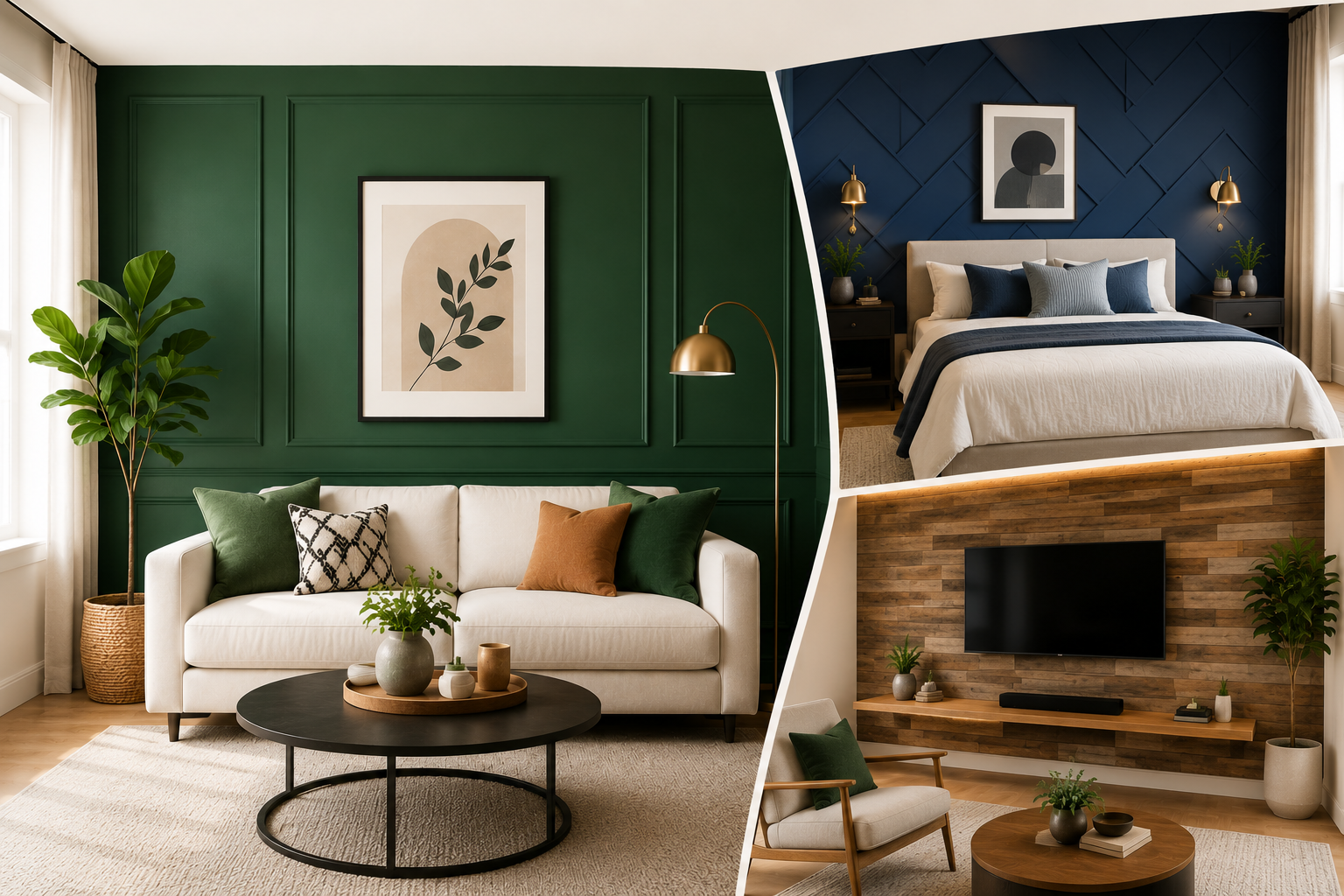
Deep navy blue, charcoal gray, forest green, and rich burgundy are popular choices because they add sophistication and depth. These darker shades can make a room feel more grounded while creating a strong visual contrast against lighter surrounding walls.
For those who prefer brighter spaces, warm terracotta, muted sage green, dusty blue, and soft clay tones offer character without overwhelming the room.
Paint also allows for creativity beyond solid colors. Geometric patterns, color blocking, arches, stripes, and artistic murals can transform a simple wall into a custom design feature.
Many homeowners begin exploring accent wall ideas through paint because it delivers significant results with relatively little investment.
Wood Accent Walls for Warmth and Character
Wood introduces natural beauty and texture that paint alone cannot achieve.
Reclaimed wood walls have become especially popular because they add rustic charm and unique character. Each plank carries its own grain patterns, color variations, and imperfections, creating a one-of-a-kind appearance.
Modern interiors often feature vertical wood slats that provide clean lines and architectural interest. These installations can make ceilings appear higher while adding depth and sophistication.
Lighter wood tones create an airy Scandinavian-inspired feel, while darker woods contribute warmth and luxury. Regardless of style, wood accent walls bring a sense of craftsmanship and authenticity that many homeowners appreciate.
Wallpaper as a Statement Feature
Wallpaper has experienced a major resurgence in recent years thanks to improved materials, designs, and installation methods.
Modern wallpaper options range from subtle textures to bold botanical prints, abstract artwork, and panoramic landscapes. This variety allows homeowners to achieve virtually any design aesthetic.
Floral patterns can soften bedrooms and reading nooks, while geometric designs often complement contemporary interiors. Textured wallpapers that mimic linen, stone, or concrete provide visual depth without requiring major renovations.
For people seeking dramatic accent wall ideas, wallpaper offers endless opportunities to introduce color, pattern, and personality into a space.
Stone and Brick Accent Walls
Natural materials create a timeless appeal that works across many design styles.
Exposed brick walls bring character and history to interiors. Whether original or manufactured, brick adds texture and warmth that can make a room feel inviting and distinctive.
Stone walls create an even more dramatic effect. Natural stone surfaces can evoke the atmosphere of luxury retreats, mountain lodges, or high-end resorts. Depending on the stone type, the result can range from rustic and organic to sleek and contemporary.
These materials are particularly effective in living rooms, dining rooms, and entryways where they can serve as striking architectural features.
Creating Luxury with Textured Panels
Textured wall panels have become increasingly popular in modern interior design.
These panels are available in a wide variety of materials, including wood composites, PVC, fabric, and decorative gypsum. Their three-dimensional surfaces add depth and visual movement that flat walls cannot provide.
Wave patterns, geometric shapes, and sculptural designs can create an upscale appearance without extensive construction work.
When paired with strategic lighting, textured panels produce shadows and highlights that change throughout the day, making the wall feel dynamic and visually engaging.
Accent Walls in the Living Room
The living room is often the most social area of a home, making it an ideal place for a feature wall.
Behind a television is one of the most common locations because it naturally serves as a focal point. Dark colors, wood slats, or stone finishes can help integrate large screens into the overall design.
Fireplaces also benefit from accent wall treatments. Enhancing the wall surrounding a fireplace can strengthen its role as the centerpiece of the room.
Many living room accent wall ideas focus on balancing comfort with visual impact, ensuring the space feels inviting while still making a strong design statement.
Bedroom Accent Walls That Enhance Relaxation
Bedrooms offer unique opportunities for creative design because they are personal spaces intended for rest and comfort.
The wall behind the bed is usually the most effective choice. It naturally frames the headboard and anchors the room’s layout.
Soft colors such as muted blue, sage green, and warm beige can create a calming atmosphere. For a more luxurious look, upholstered panels, wood slats, or textured wallpaper add elegance and depth.
The goal is to create visual interest without introducing excessive stimulation that could interfere with relaxation.
Home Office Accent Wall Inspiration
As remote work continues to grow, home office design has become increasingly important.
An accent wall can improve the visual appeal of a workspace while helping define a productive environment. Deep greens and blues are often chosen because they create a sense of focus and professionalism.
Bookshelves, decorative panels, or custom-built storage systems can function as both practical and decorative feature walls.
Among modern accent wall ideas, office designs frequently emphasize a balance between aesthetics and functionality.
Dining Room Feature Walls
Dining rooms benefit greatly from accent walls because they are often used for gatherings and special occasions.
Rich colors such as navy, emerald, and burgundy can add sophistication and intimacy. Wallpaper featuring elegant patterns can elevate the dining experience while creating a memorable atmosphere.
Mirrored panels and decorative molding are also popular choices for homeowners seeking a refined appearance.
A thoughtfully designed dining room accent wall encourages conversation and helps establish a welcoming setting for guests.
Using Lighting to Enhance an Accent Wall
Even the most beautiful wall design can lose its impact without proper lighting.
Wall sconces, recessed lighting, LED strips, and picture lights can highlight textures, colors, and architectural details. Lighting creates shadows and depth that enhance the visual appeal of materials such as wood, stone, and textured panels.
Warm lighting tends to create a cozy atmosphere, while cooler lighting often emphasizes modern and contemporary designs.
Integrating lighting into your accent wall plan from the beginning can significantly improve the final result.
Color Psychology and Accent Walls
Colors influence mood more than many people realize.
Blue tones often promote calmness and concentration. Green is associated with nature, balance, and relaxation. Earthy colors create warmth and comfort, while darker shades can introduce sophistication and drama.
Red and orange tones add energy and excitement but should be used carefully in spaces intended for relaxation.
Understanding basic color psychology helps homeowners choose designs that align with the intended purpose of each room.
Common Mistakes to Avoid
While accent walls can dramatically improve a room, certain mistakes can reduce their effectiveness.
Choosing a wall without considering the room’s layout often results in a design that feels disconnected. Similarly, selecting colors that clash with existing furniture and décor can create visual confusion.
Overly complex patterns may overwhelm small spaces, while poor lighting can diminish the impact of textures and details.
Successful accent wall ideas are usually those that complement the overall design rather than compete with it.
Matching Accent Walls with Different Design Styles
Every design style can benefit from a thoughtfully executed accent wall.
Modern interiors often feature clean lines, geometric patterns, and monochromatic color schemes. Farmhouse spaces frequently incorporate reclaimed wood and rustic textures. Industrial designs pair well with exposed brick, concrete finishes, and dark tones.
Traditional homes may use decorative molding, elegant wallpaper, or rich paint colors, while Scandinavian interiors often favor light woods and minimalist designs.
The key is ensuring the accent wall feels like a natural extension of the room’s overall aesthetic.
The Lasting Appeal of Accent Walls
Accent walls remain one of the most effective tools in interior design because they offer a high-impact transformation without requiring a complete renovation.
Whether created with paint, wood, wallpaper, stone, or textured panels, they provide an opportunity to express personality and add depth to a room. The flexibility of modern materials and design trends means there is a solution for every style, budget, and space.
The best accent wall ideas combine creativity with purpose. They draw attention, enhance functionality, and contribute to a cohesive design that makes a room feel more inviting and memorable. By carefully considering color, texture, lighting, and placement, homeowners can create feature walls that remain stylish and relevant for years to come.
Conclusion
Accent walls are one of the simplest yet most impactful ways to enhance a home’s interior design. For more home improvement ideas, explore our latest guides. Whether created with paint, wallpaper, wood, stone, or textured panels, they add depth, personality, and visual interest without requiring a complete renovation. A thoughtfully designed accent wall can highlight architectural features, define a focal point, and bring balance to a room’s overall aesthetic.
The key to success lies in choosing the right wall, selecting materials that complement the existing décor, and ensuring the design aligns with the room’s purpose. With careful planning and creativity, an accent wall can transform an ordinary space into a stylish and memorable environment that reflects your personal taste for years to come.
Frequently Asked Questions (FAQ’S)
- What is an accent wall?
An accent wall is a single wall designed differently from the others to create a focal point in a room. - Are accent walls still popular?
Yes, accent walls remain a popular design trend in both modern and traditional homes. - Which wall should be the accent wall?
Choose the wall that naturally draws attention when someone enters the room. - What colors work best for accent walls?
Deep blues, greens, grays, and warm earth tones are among the most popular choices. - Can wallpaper be used for an accent wall?
Yes, wallpaper is a great option for adding patterns, texture, and visual interest. - Do accent walls make rooms look bigger?
When designed correctly, they can create depth and make a room feel more spacious. - Are wood accent walls a good choice?
Yes, wood adds warmth, texture, and a timeless look to almost any space. - Can every room have an accent wall?
It’s possible, but using accent walls selectively usually creates a stronger visual impact.
