
If you’ve spent any time browsing home decor content lately, you’ve probably come across the phrase interior design DrHomey. It isn’t a single designer or a rigid style you have to copy exactly. It’s more of a practical philosophy that has grown out of a home and lifestyle platform focused on real, livable spaces rather than showroom perfection. The whole idea is simple: your home should work for you first, and look good second though in practice, when it works well, it usually looks good too.
A lot of interior design advice online assumes you have a generous budget, a blank room, and total creative freedom. Most people don’t have any of those things. They have a rental with rules about paint colors, a living room that also doubles as a home office, and a budget that has to stretch across several rooms at once. This is exactly the gap that this approach tries to fill. It takes ideas that used to feel reserved for design magazines and turns them into steps an ordinary homeowner or renter can actually follow on a weekend.
What Makes This Approach Different
Traditional interior design often starts with a mood board and a big vision. This approach flips that order. It starts by asking how a room is actually used day to day, and only then moves on to color, furniture, and decor. This might sound like a small distinction, but it changes everything about how a space turns out.
Think about a living room that hosts movie nights, homework sessions, and the occasional guest sleepover, all in the same twelve by fourteen feet. A designer working purely on aesthetics might choose a low-profile sofa and a glass coffee table because it photographs beautifully. Someone following this function-first philosophy would ask different questions first. Where do the kids do homework? Where does the guest mattress go? What furniture can quietly serve two purposes instead of one? The answers shape the room before a single color swatch gets picked.
This function-first mindset is really the backbone of the whole philosophy. Every item in a room needs to justify its presence, either by serving a clear purpose or by genuinely earning its spot through beauty and meaning. If a decorative piece just sits there making the room harder to move through, it doesn’t belong, no matter how nice it looks in a catalog.
The Color Rule That Makes Everything Easier
One of the most repeated pieces of advice within this philosophy is a simple color ratio that takes the guesswork out of decorating. It works like this: sixty percent of a room should be your dominant color, usually the wall paint or the largest furniture piece. Thirty percent goes to a secondary color, often seen in curtains, an accent chair, or a rug. The remaining ten percent is reserved for pops of accent color, like throw pillows, artwork, or small decor pieces.
This ratio matters because most rooms that feel “off” aren’t badly decorated, they’re just unbalanced. Too many competing colors fight for attention, or everything blends together so much that the room feels flat. Following the sixty-thirty-ten split gives a room visual rhythm without requiring any real design training. It’s one of those rules that sounds almost too simple, but it consistently works.
Another small but important tip that gets repeated often in this space is to always test paint directly on the wall before committing. Screens and paint chips under store lighting rarely match how a color behaves once it’s on your actual wall, under your actual light, at different times of day.
Layered Lighting Changes Everything
Furniture and color get most of the attention in home decor conversations, but lighting quietly does more heavy lifting than almost anything else. A beautifully furnished room under one harsh overhead light will still feel cold and uninviting. This is one of the core lessons behind interior design DrHomey: a room needs layers of light, not just one source.
The first layer is ambient lighting, the general illumination that fills the room, usually from ceiling fixtures or recessed lights. The second layer is task lighting, which is focused and functional, like a reading lamp beside an armchair or under-cabinet lights in a kitchen. The third layer is accent lighting, used to highlight artwork, plants, or architectural details with wall sconces or small spotlights.
When these three layers work together, a room can shift mood depending on the time of day or the activity happening in it. Bright and functional during the day, warm and relaxed in the evening. This layered approach is far more affordable than most people assume, since it usually just means adding a couple of lamps rather than rewiring anything.
Applying the Method Room by Room
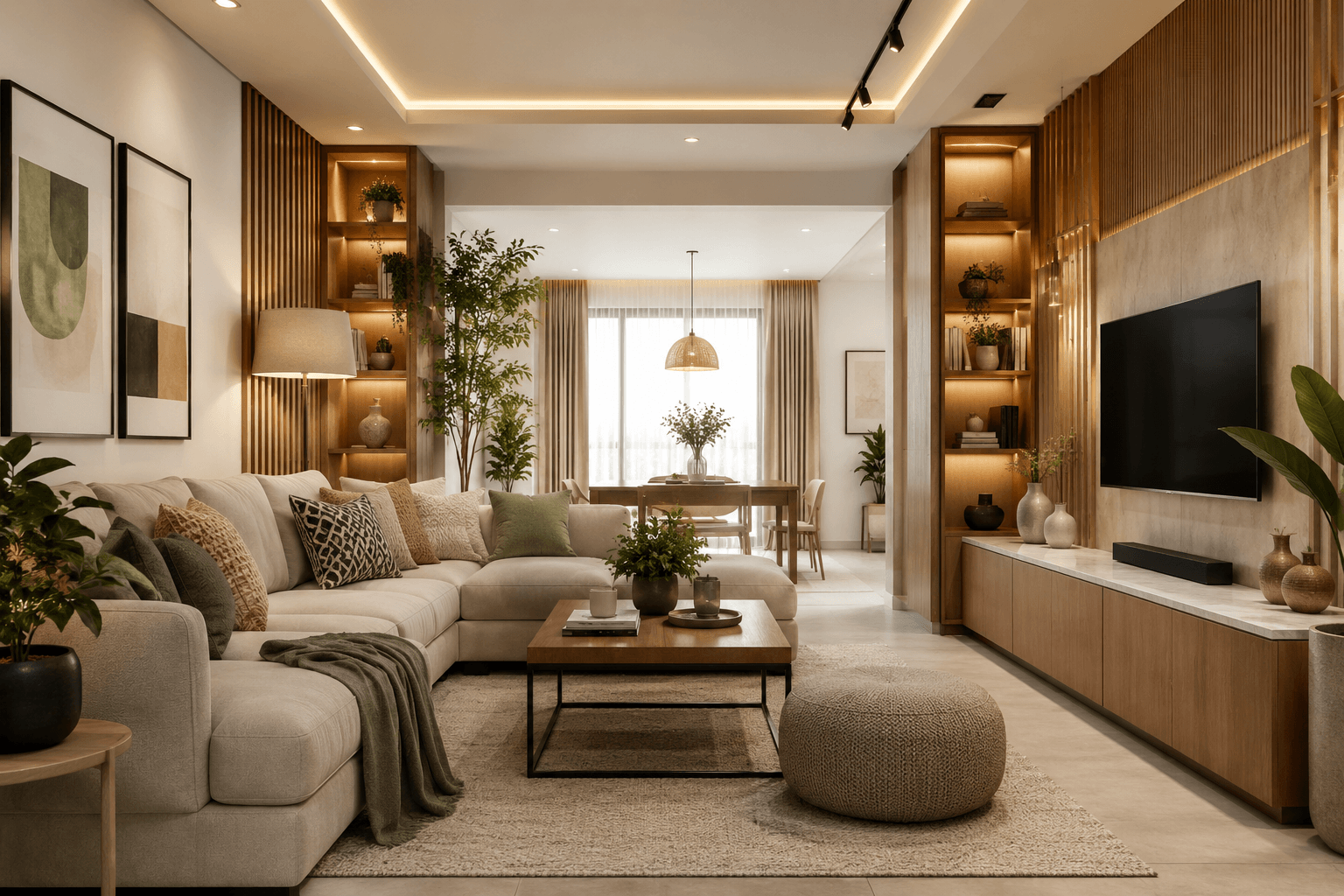
The living room is usually where interior design DrHomey principles are easiest to see in action. Furniture gets pulled slightly away from the walls, even by a few inches, because it makes a room feel more open rather than boxed in. A large area rug anchors the seating area, and the general rule is that the front legs of your main furniture pieces should rest on the rug, not float off the edge of it. Mixing textures, like a soft knit throw against a leather chair, adds depth without adding clutter.
Kitchens follow a slightly different logic, one built almost entirely around efficiency. Clear countertops make the space feel bigger and more functional immediately. Cabinets that run all the way to the ceiling use vertical space that often gets wasted, and they reduce the dust-collecting gap that sits above standard cabinets. None of this requires a full renovation. Small shifts in organization can transform how a kitchen feels to cook in.
Bedrooms tend to benefit most from restraint. A calm color palette, soft layered bedding, and minimal visual clutter near the headboard all support better rest. This guidance often points out that bedrooms are one of the easiest rooms to overdecorate, since it’s tempting to treat them like a showroom rather than a place meant for actual sleep.
Budget Really Isn’t a Barrier
One of the more appealing aspects of interior design DrHomey is how openly it addresses budget. The philosophy doesn’t pretend that everyone has thousands of dollars to spend. Instead, it treats budget as a variable to design around, not a limitation that rules out good design altogether.
A weekend refresh might mean new throw pillows, a fresh coat of paint on one accent wall, and rearranged furniture. A larger renovation might involve new flooring, custom cabinetry, and updated lighting fixtures throughout. The underlying principles, function first, balanced color, layered light, stay exactly the same regardless of how much money is involved. This scalability is a big part of why the approach has resonated with such a wide range of homeowners and renters.
Shopping your own home is another idea that shows up frequently in this context. Moving a rug from the bedroom to the living room, or repurposing an old dresser with new hardware and a coat of paint, can create the feeling of a fresh purchase without spending anything close to retail price.
Interior Design DrHomey for Renters
Renters face a unique set of restrictions, and this is an area where this kind of advice tends to be especially practical. Since permanent changes like painting walls or drilling into tile usually aren’t allowed without permission, the focus shifts toward reversible upgrades. Peel-and-stick wallpaper, swappable cabinet hardware, and tension rod shelving all fall into this safer category, as long as you keep the original hardware for when you move out.
This renter-friendly mindset reflects the broader spirit of the approach: work within real constraints instead of ignoring them. A rented apartment can still feel intentional and personal, it just requires a bit more creativity about what counts as a permanent versus temporary change.
The Psychological Side of a Well-Designed Home
There’s a reason interior design DrHomey content often blends decorating advice with organization and even mental wellbeing tips. A cluttered, poorly lit, visually chaotic home doesn’t just look messy, it actually affects how people feel in it. Clear surfaces and defined storage zones reduce the low-grade mental fatigue that comes from constant visual noise.
This is part of why the approach pairs design tips with quick decluttering methods, like setting a short timer to tackle one small area at a time instead of trying to overhaul an entire house in one exhausting weekend. Small, completed tasks tend to build motivation, while overwhelming projects tend to stall out. Interior design isn’t just about how a room looks in a photograph, it’s about how a person actually feels living inside it day after day.
Getting Started Without Overwhelm
The easiest way to begin applying these ideas is to pick one room and one problem, rather than trying to fix an entire house at once. Maybe it’s fixing the lighting in a dark hallway, or finally buying a rug that’s the right size for the living room. Small wins add momentum, and momentum is usually what turns a vague decorating idea into an actual finished space.
There’s no single correct way to decorate a home, but having a clear set of principles to lean on makes decisions faster and less stressful. That, more than any specific color trend or furniture style, is really what interior design DrHomey offers: a calmer, more confident way to make a home feel like yours.
Frequently Asked Questions
Is DrHomey a real interior designer or a company?
DrHomey isn’t a single person. It refers to a home and lifestyle platform that publishes practical guidance on interior design, DIY projects, and everyday home improvement, drawing on input from designers and experienced homeowners rather than one individual voice.
Do I need a big budget to follow this design approach?
No. The core principles, like the sixty-thirty-ten color rule and layered lighting, work at any budget level, whether you’re spending fifty dollars on a small refresh or planning a full room renovation.
Can renters use these design tips without losing their deposit?
Yes, as long as you stick to reversible changes like peel-and-stick wallpaper, swappable hardware, and tension rod shelving. Always keep original fixtures and hardware so you can restore the space before moving out.
What is the sixty-thirty-ten rule?
It’s a color balancing guideline where sixty percent of a room uses a dominant color, thirty percent uses a secondary color, and ten percent is reserved for accent colors. It helps rooms feel cohesive instead of chaotic.
Why does lighting matter so much in this design philosophy?
Lighting affects mood and functionality more than most people realize. A room with only one overhead light source tends to feel flat, while ambient, task, and accent lighting together create warmth and usability.
How do I start decorating without feeling overwhelmed?
Focus on one room or even one problem at a time, like fixing poor lighting or buying a properly sized rug, instead of trying to redesign your whole home at once.
Does this approach work for small apartments too?
Yes. In fact, the function-first mindset tends to matter even more in smaller spaces, since every piece of furniture needs to earn its place and often needs to serve more than one purpose.
