


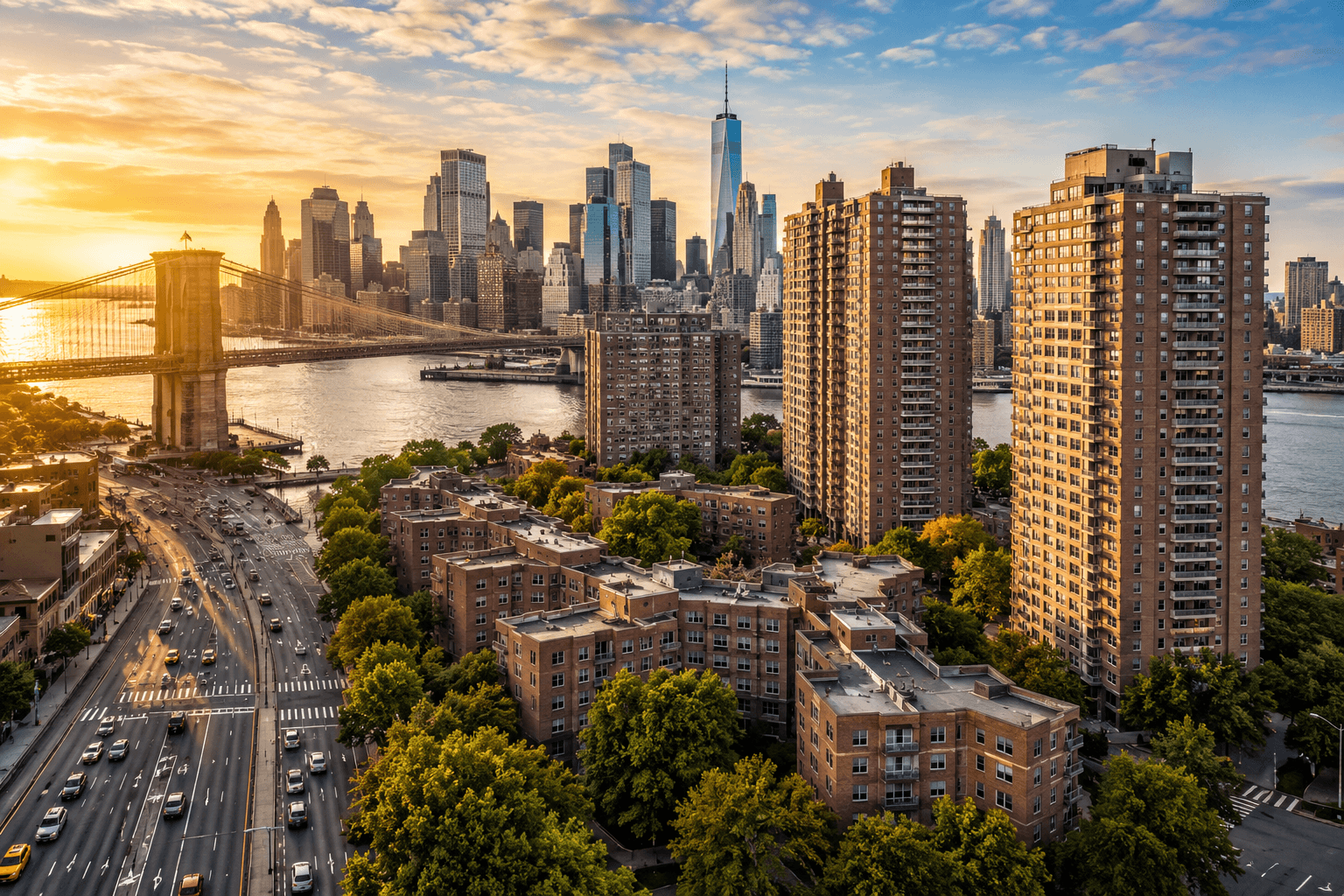
Southbridge Towers is one of the most recognizable residential complexes in Lower Manhattan, sitting quietly between the Financial District and the Civic Center. For decades, it has offered a unique blend of affordability, location, and community that is hard to find anywhere else in New York City. Anyone researching housing options near the South Street Seaport or the Brooklyn Bridge has likely come across this name, and for good reason. Southbridge Towers represents a piece of New York’s housing history that continues to shape how people live in the city today.
This article takes a close look at what makes Southbridge Towers special, from its origins as a Mitchell-Lama development to its transformation into a private cooperative. Whether you’re a prospective buyer, a curious resident, or someone simply interested in New York City housing history, this guide will walk you through everything worth knowing.
The Origins of Southbridge Towers
Southbridge Towers was constructed between 1961 and 1971 by Tishman Realty & Construction, a well-known name in New York’s building industry at the time. The project emerged from the Brooklyn Bridge Southwest Urban Renewal Area, a designation given to a stretch of industrial waterfront that city planners hoped to transform into something more livable. Before Southbridge Towers existed, this part of Lower Manhattan was a congested, somewhat neglected pocket of the city, filled with warehouses and shipping-related businesses that had fallen out of use.
The idea behind Southbridge Towers was straightforward but ambitious. City planners wanted to bring middle-class families back into Lower Manhattan by creating housing that was both affordable and well built. The development was designed by the architecture firm Gruzen & Partners, and it was built under New York’s Mitchell-Lama Housing Program, a state initiative created in 1955 to expand affordable housing for middle-income residents. Southbridge Towers became one of the largest and most successful examples of this program in Manhattan.
Architecture and Layout of the Complex
Southbridge Towers consists of nine buildings in total. Four of these rise 27 stories into the sky, while the remaining five are lower, six-story structures. Together, they contain 1,651 apartments spread across more than 330,000 square feet of residential space. The buildings are bound by Pearl, Gold, Fulton, and Frankfort streets, placing the complex just south of the entrance ramp to the Brooklyn Bridge.
What stands out about the design of Southbridge Towers is how the buildings interact with one another. Each structure faces a different view, whether it’s the Brooklyn Bridge, the East River, the surrounding cityscape, or internal courtyards shared by residents. This layout gives the complex a sense of openness that many high-density buildings in Manhattan lack. Many units also include private terraces, which was a fairly unusual feature for affordable housing built in this era.
The apartments themselves range from studios to three-bedroom units, with the larger apartments typically including one and a half bathrooms. Over the years, Southbridge Towers has remained popular among families, retirees, and professionals who want space without sacrificing proximity to the rest of Manhattan.
Life Under the Mitchell-Lama Program
For more than four decades, Southbridge Towers operated as a subsidized cooperative under the Mitchell-Lama program. This meant that residents purchased their apartments at below-market prices, and in exchange, they agreed to income restrictions and limits on how much profit they could make if they chose to sell their units later.
Original buyers at Southbridge Towers paid remarkably modest prices for their apartments, sometimes averaging around seventeen thousand dollars, which was a fraction of what comparable housing cost elsewhere in the city. This affordability made Southbridge Towers a haven for middle-class New Yorkers who wanted to live in Lower Manhattan without paying the premium prices typically associated with the area.
The tradeoff, of course, was that residents couldn’t freely sell their apartments for whatever the market would bear. Mitchell-Lama rules capped resale values, which kept the housing stock affordable for future buyers but also limited the financial upside for longtime residents. This arrangement worked well for many years, but as Lower Manhattan became increasingly desirable and expensive, pressure began to build within the Southbridge Towers community to reconsider the arrangement.
The Long Road to Privatization
The conversation about leaving the Mitchell-Lama program at Southbridge Towers wasn’t a quick or simple one. In October 2005, the cooperative’s board of directors voted to authorize a study examining what privatization might look like and what it would cost residents. This study set off years of debate among shareholders, many of whom had strong feelings on both sides of the issue.
Supporters of privatization argued that leaving Mitchell-Lama would allow residents to sell their apartments at market rate, unlocking substantial financial gains for people who had lived in Southbridge Towers for decades. Opponents worried about losing the affordability that had defined the community since its founding, along with concerns about rising maintenance costs and property taxes once the co-op left the subsidized program.
After roughly eight years of discussion, the residents of Southbridge Towers finally voted in September 2014 to move forward with privatization. This made Southbridge Towers the largest Mitchell-Lama cooperative in Manhattan to leave the program at that point, a significant milestone given the shrinking supply of affordable housing across the city. The privatization process was completed on September 10, 2015, officially transforming Southbridge Towers into a privately owned cooperative.
What Privatization Meant for Residents
The shift away from Mitchell-Lama had real consequences for people living at Southbridge Towers. Shareholders who had purchased their apartments decades earlier for a few thousand dollars suddenly found themselves able to sell at market rates, with some transactions reaching into the high six figures. For longtime residents, this represented a life-changing financial opportunity.
At the same time, privatization introduced new realities. Maintenance fees and property taxes at Southbridge Towers adjusted to reflect its new status outside the subsidized housing program. New buyers moving into Southbridge Towers after 2015 paid closer to market value, which meant the complex was no longer the budget-friendly option it once was for incoming residents. Still, compared to many other cooperative buildings in the Financial District, Southbridge Towers has managed to keep its monthly maintenance costs relatively reasonable, partly because utilities are often included.
The Neighborhood Around Southbridge Towers
One of the biggest draws of Southbridge Towers has always been its location. The complex sits close to the South Street Seaport, a historic waterfront district filled with shops, restaurants, and cultural attractions tied to New York’s maritime past. City Hall, Pace University, and the broader Financial District are all within easy walking distance, making Southbridge Towers a convenient home base for people who work downtown or simply want to be near the center of the city’s civic life.
Transportation access around Southbridge Towers is another major advantage. The Fulton Street Transit Center, which serves multiple subway lines, is only a short walk away, and the Brooklyn Bridge–City Hall station adds even more options for getting around the city. Residents of Southbridge Towers also have relatively easy access to the Staten Island Ferry, which many find useful for commuting or simply enjoying the harbor views.
Beyond transportation, the area surrounding Southbridge Towers has grown significantly over the past two decades. Chinatown is nearby, offering a completely different pace and character, while Battery Park City provides green space and river walks just a short distance away. This mix of neighborhoods gives residents of Southbridge Towers access to a wide variety of dining, shopping, and recreational options without needing to travel far.
Amenities and Community Features
Southbridge Towers offers a range of amenities that contribute to its appeal as a residential community. There are onsite parking garages available to residents at discounted rates, along with storage rooms for those who need extra space. Outdoor courtyards and green spaces give the complex a park-like feel that’s somewhat unusual for a building this close to the Financial District.
The community atmosphere at Southbridge Towers has also played a role in its long-term appeal. Because many original Mitchell-Lama residents stayed in their apartments for decades, a strong sense of neighborhood identity developed over the years. Even after privatization, this community feeling has largely persisted, with longtime residents and newer buyers coexisting within the same nine buildings.
People exploring different apartment communities across the United States may also find our Willow Grove Apartments Guide helpful for comparing amenities, neighborhood lifestyle, and long-term housing value.
Why Southbridge Towers Still Matters Today
Southbridge Towers offers a window into how New York City has approached affordable housing over the past sixty years. Its history reflects both the successes and the limitations of programs like Mitchell-Lama, showing how a well-intentioned affordability initiative can eventually run into pressure from a changing real estate market. The story of Southbridge Towers also highlights how urban renewal efforts from the 1960s continue to shape neighborhoods today, decades after the original construction was completed.
For anyone considering a home in Lower Manhattan, Southbridge Towers remains a compelling option. Its combination of spacious apartments, private terraces, and a prime location near the Brooklyn Bridge sets it apart from many newer developments in the area. While it’s no longer the budget-friendly co-op it was during its Mitchell-Lama years, Southbridge Towers still offers relatively reasonable maintenance costs compared to similar buildings nearby, along with a sense of history that few other complexes in the neighborhood can match.
If you’re researching other residential communities before making a housing decision, our Willow Grove Apartments Guide offers another detailed look at apartment living, local amenities, and what renters or buyers should expect.
Final Thoughts
Southbridge Towers is more than just a residential complex it’s a living piece of New York City’s housing history. From its beginnings as a Mitchell-Lama development aimed at bringing middle-class families back to Lower Manhattan, to its eventual transformation into a private cooperative, Southbridge Towers reflects the changing dynamics of affordability, ownership, and urban living in one of the world’s most competitive real estate markets.
For longtime residents, Southbridge Towers represents decades of community, stability, and eventually financial reward after privatization. For newcomers, it offers a rare combination of spacious apartments, private terraces, and an unbeatable location near the Brooklyn Bridge and South Street Seaport, all without straying too far from the energy of the Financial District.
Whether you’re drawn in by its history, its architecture, or simply its location, remains one of the most distinctive residential communities Lower Manhattan has to offer. It’s a reminder that even in a city that’s constantly changing, some places manage to hold onto their character and their story. The history of also reflects the broader success of New York’s affordable housing initiatives. Readers interested in the program that shaped this community can learn more about the Mitchell–Lama Housing Program and its impact on residential development across New York.
Frequently Asked Questions
What is Southbridge Towers?
This is a large residential cooperative complex located in Lower Manhattan, made up of nine buildings and 1,651 apartments. It was originally built as an affordable housing development and later became a private co-op.
When was Southbridge Towers built?
Construction took place between 1961 and 1971, with the complex officially opening in 1971 under New York’s Mitchell-Lama housing program.
Is Southbridge Towers still part of the Mitchell-Lama program?
No. Residents voted to privatize in September 2014, and the process was completed in September 2015, making Towers a fully private cooperative.
Where exactly is Southbridge Towers located?
Southbridge Towers is situated in Lower Manhattan, bordered by Pearl, Gold, Fulton, and Frankfort streets, just south of the Brooklyn Bridge entrance ramp and close to the South Street Seaport.
What kind of apartments does Southbridge Towers offer?
The complex includes studios along with one, two, and three-bedroom apartments. Many units feature private terraces and views of either the East River or the Manhattan skyline.
Why did residents choose to privatize Southbridge Towers?
After years of debate, residents voted for privatization mainly to gain the ability to sell their apartments at market value, which allowed many longtime owners to realize significant financial gains after decades of Mitchell-Lama restrictions.
