


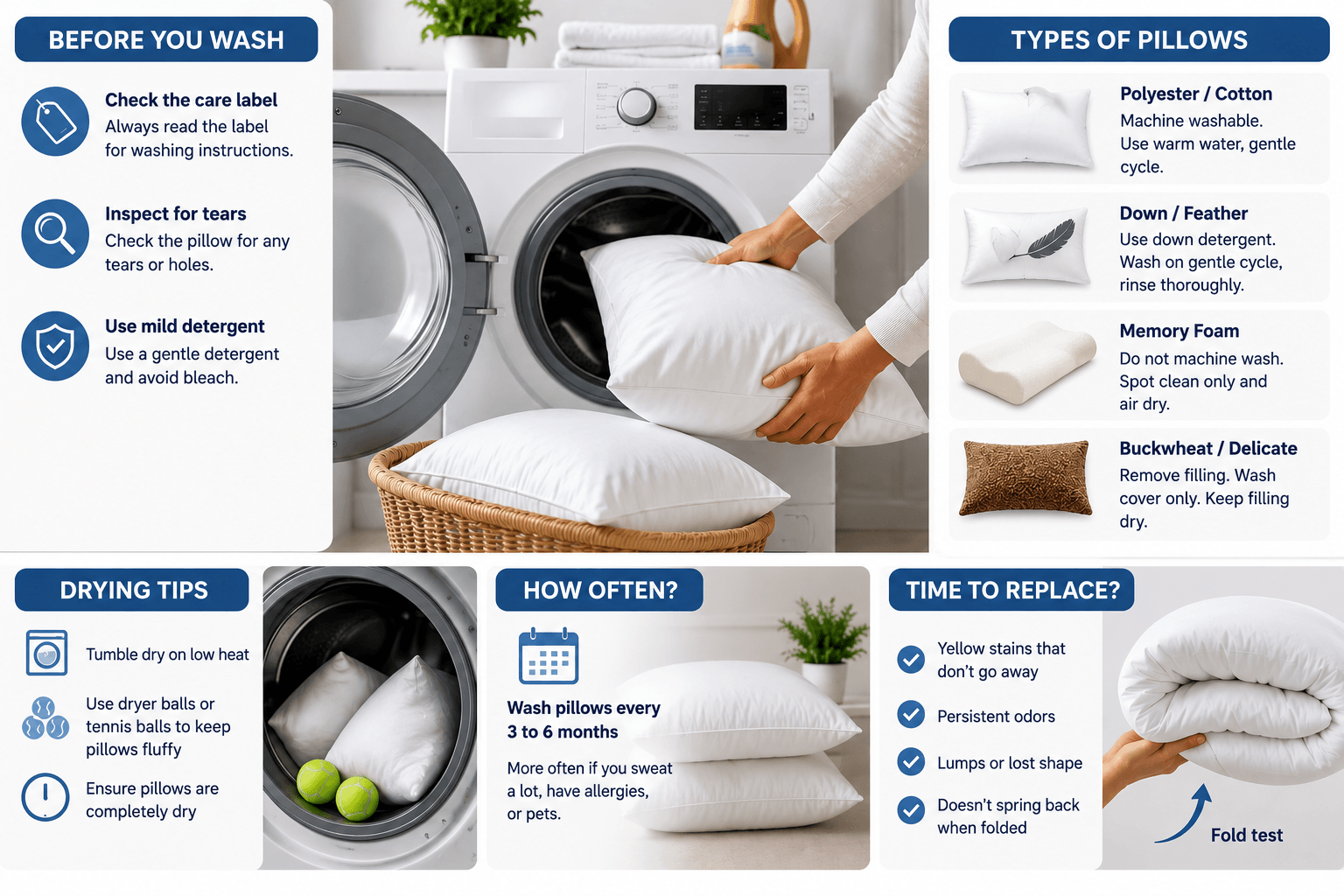
Most people wash their sheets every week but forget about the pillows underneath them. Over time, pillows soak up sweat, body oils, dead skin cells, and dust mites, even with a pillowcase on. Learning how to wash pillows properly is one of the simplest ways to improve sleep hygiene, extend the life of your pillows, and keep your bedroom smelling fresh. This guide walks through everything you need to know, from checking the care label to drying techniques that actually work.
Why Washing Pillows Matters More Than You Think
A pillow sits directly against your face for roughly seven or eight hours a night. During that time, it absorbs moisture from breathing, sweating, and drooling. It also collects skin flakes, which are a favorite food source for dust mites. Left unwashed for months or years, a pillow can double in weight simply from accumulated debris.
This buildup isn’t just unpleasant to think about. It can trigger allergies, worsen asthma symptoms, and contribute to breakouts on the skin. People with sensitive skin or respiratory issues often notice a real difference once they start cleaning their pillows on a regular schedule. Knowing how to wash pillows correctly also helps them keep their shape and loft longer, so you don’t have to replace them as often. Regular cleaning habits throughout your home can make a noticeable difference too. For example, learning how to clean baseboards helps reduce dust that can eventually settle on bedding and pillows.
Check the Care Label First
Before doing anything else, look at the tag sewn into the pillow. Manufacturers include specific instructions because different fill materials react differently to water, heat, and agitation. A label might say “machine washable,” “dry clean only,” or “spot clean only.” Ignoring these instructions is one of the most common mistakes people make when they try to figure out how to wash pillows without ruining them.
If the tag has worn off or you no longer remember what kind of pillow you bought, look at the fill type. Down and feather pillows, synthetic polyester pillows, memory foam pillows, and buckwheat pillows each need a different approach. This distinction matters more than most people realize, because a technique that works beautifully on one material can destroy another.
How to Wash Pillows Filled with Polyester or Cotton
Synthetic polyester pillows are the easiest to clean and are usually safe for a standard washing machine. Start by removing the pillowcase and any protector, then check for tears in the fabric shell that could let stuffing escape during the wash cycle.
Place two pillows in the machine at once if possible, since washing just one can throw off the balance and cause the machine to shake. Use warm water and a mild liquid detergent, avoiding powder detergent because it can leave residue trapped inside the fill. Run the machine on a gentle cycle, and consider adding an extra rinse cycle to make sure all the soap is fully removed.
For a deeper clean, some people add a small amount of white vinegar or baking soda to the wash to help neutralize odors and brighten dull fabric. Baking soda is well known for its odor-absorbing properties and is widely used in household cleaning. This step is optional but can make a noticeable difference, especially with pillows that have absorbed strong smells over time. Whenever someone asks how to wash pillows made from cotton or polyester fill, this straightforward machine method is usually the answer.
How to Wash Pillows Filled with Down or Feathers
Down and feather pillows require more patience, but they can absolutely go in the washing machine if the care label allows it. The key is using a specialty detergent designed for down products, since regular detergent can strip the natural oils that keep feathers fluffy and resilient.
Wash two pillows together on a gentle, low-heat cycle. Run the rinse cycle at least twice, because down clumps together when soap residue remains, and it can take much longer to dry evenly. Some people prefer hand washing down pillows in a bathtub filled with lukewarm water and gentle soap, pressing the pillow repeatedly to work the cleanser through the feathers before rinsing thoroughly.
Drying is the most important part of this process. Down pillows must be completely dry before use, or they can develop mildew and a musty smell inside the fill. This is one of the trickier parts of learning how to wash pillows with natural fill, since patience during drying matters just as much as the washing itself.
How to Wash Pillows Made from Memory Foam
Memory foam pillows should never go in a washing machine or dryer. The dense foam absorbs water and can break apart under the agitation of a machine cycle, plus it dries extremely slowly, which invites mold growth inside the foam.
Instead, remove the outer cover and wash it separately according to its label, usually in cold water on a gentle cycle. For the foam itself, spot clean using a cloth dampened with mild soapy water, gently blotting stains rather than rubbing them in. Let the foam air dry completely in a well-ventilated space before putting the cover back on.
Some people also sprinkle baking soda over memory foam pillows and let it sit for a few hours before vacuuming it off. This helps absorb odors without introducing excess moisture, which is the biggest risk with this particular fill type.
How to Wash Pillows That Are Buckwheat or Have Other Delicate Fillings
Buckwheat hull pillows and certain specialty pillows with delicate or non-washable fillings need a different strategy altogether. The outer cover can typically be removed and machine washed, but the hulls or inner filling material should never get wet, since moisture causes them to mold and rot.
For these types, empty the hulls into a clean, dry container, wash and fully dry the cover, then refill it once everything is completely dry. This is a slower process, but it’s the only safe way to keep buckwheat pillows clean without damaging the natural filling inside.
Drying Pillows the Right Way
Whatever type of pillow you’re working with, drying is where most mistakes happen. Pillows need low heat and plenty of time, since high heat can melt synthetic fibers or scorch fabric, while insufficient drying leaves damp spots where mold can grow.
For machine-washable pillows, tumble dry on low heat and toss in a few clean tennis balls or dryer balls. These help break up clumps of fill and keep the pillow’s loft even as it dries. Expect the process to take several cycles, sometimes two to three hours total, with pauses to fluff and reposition the pillow by hand.
Air drying works too, especially for delicate materials, but it takes much longer and works best outdoors on a warm, breezy day. Always confirm a pillow is bone dry all the way through the center before placing it back on the bed, since even a small pocket of moisture can cause a musty smell days later.
How Often You Should Wash Pillows
Most sleep and cleaning experts recommend washing pillows every three to six months, depending on how much they’re used and whether allergies are a concern. People who sweat heavily at night, have pets that sleep on the bed, or suffer from allergies may benefit from washing more frequently, closer to every two to three months.
Pillow protectors can extend the time between washes significantly, since they act as a barrier between the pillow and moisture, oils, and skin cells. Using one alongside a regularly washed pillowcase is one of the easiest ways to keep pillows cleaner for longer and reduce how often deep washing is needed.
Signs a Pillow Needs Replacing, Not Just Washing
Washing extends a pillow’s life, but it isn’t a permanent fix. If a pillow has yellow stains that don’t lighten after washing, a persistent odor even after drying, or has lost its shape and no longer springs back when folded, it’s likely time to replace it rather than wash it again.
A simple fold test can help: fold the pillow in half and see if it springs back to its original shape. If it stays folded or feels lumpy and flat, the support and comfort it offers have likely declined enough that a new pillow would serve you better than another wash cycle.
Final Thoughts on Keeping Pillows Fresh
Understanding how to wash pillows properly makes a real difference in comfort, hygiene, and how long your pillows last. The right method depends entirely on what the pillow is filled with, so checking the label and choosing the appropriate washing and drying technique is always the first step. With a regular cleaning routine every few months, along with a good pillow protector, you can keep your pillows fresher, healthier, and more comfortable night after night. Pairing pillow care with other household cleaning tasks, such as how to clean baseboards, helps create a cleaner, lower-dust sleeping environment throughout your home.
Frequently Asked Questions
Can I wash all my pillows at the same time?
It’s best to wash pillows in pairs rather than alone, since a single pillow can unbalance the washing machine. However, avoid overcrowding the drum, as pillows need room to move freely for the detergent to rinse out completely.
Is it safe to wash pillows in hot water?
Hot water can damage certain fill materials, especially down and memory foam. Warm or lukewarm water is generally the safer choice unless the care label specifically says hot water is fine.
Why do my pillows smell musty even after washing?
A musty smell almost always means the pillow wasn’t fully dry before use. Moisture trapped inside the fill allows mold and mildew to grow, so extending the drying time or adding extra dryer cycles usually solves the problem.
Do I really need a pillow protector if I already use a pillowcase?
Yes, a pillowcase alone doesn’t block moisture and oils as effectively as a protector. Adding one reduces how often you need to deep clean your pillows and helps them stay fresh between washes.
How do I know if a pillow is machine washable?
Check the care label first, since it will state clearly whether the pillow is machine washable, hand wash only, or dry clean only. If there’s no label, the fill type is usually a good indicator, with polyester and down often being safe for machine washing and memory foam or buckwheat needing a gentler, more manual approach.
