

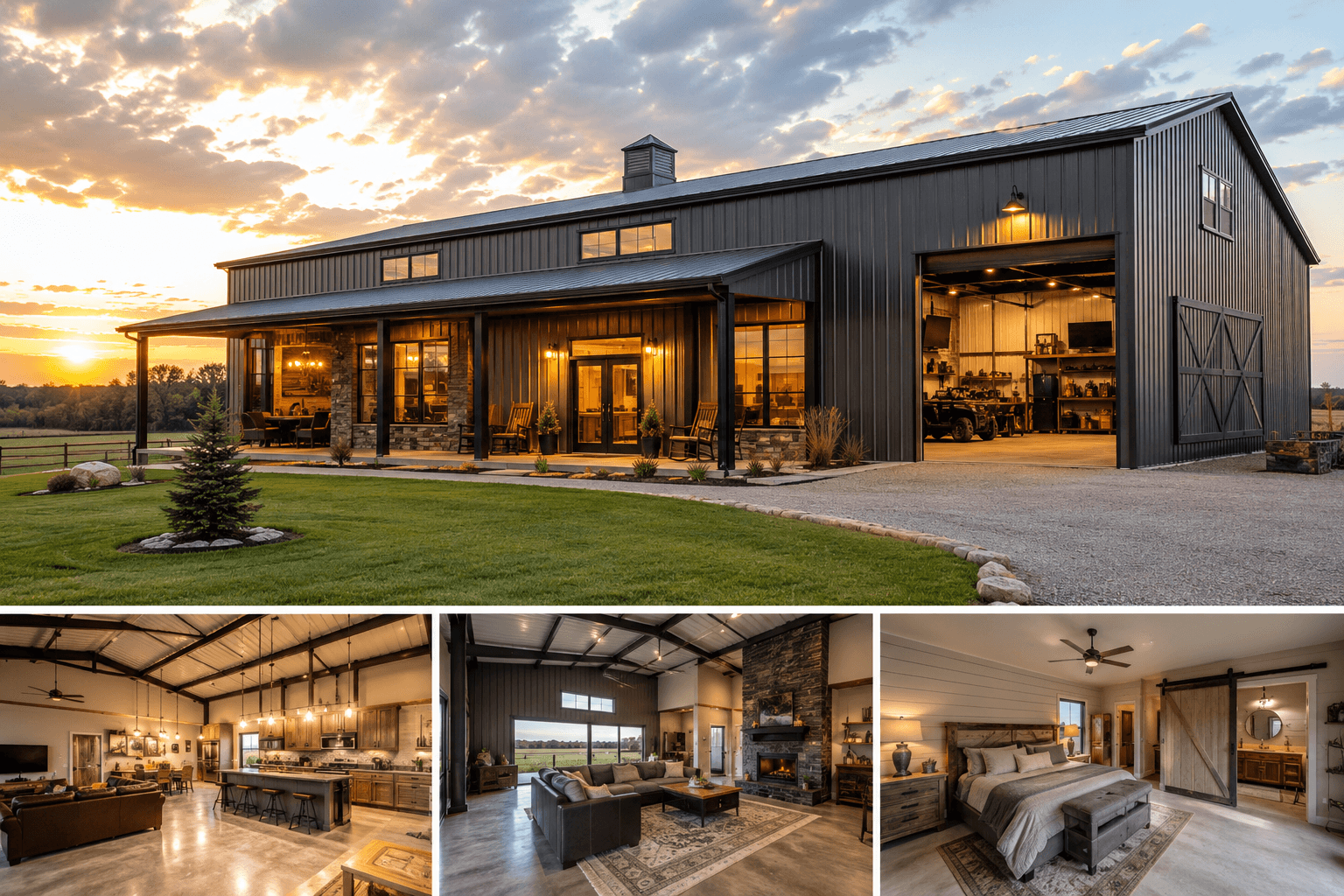
If you’ve spent any time browsing rural real estate listings lately, you’ve probably noticed a growing number of results for a barndominium for sale. What used to be a niche housing style built mostly by hobby farmers and DIY enthusiasts has become one of the most searched-for property types in the country. People are drawn to the mix of open living space, metal-frame durability, and lower cost per square foot compared to a traditional stick-built home. But before you commit to buying one, it helps to understand exactly what you’re looking at, what to expect price-wise, and what questions to ask before signing anything.
What Is a Barndominium?
A barndominium is essentially a home built using a metal or post-frame barn structure that has been finished out with living space. Some are fully residential from the ground up, while others started as a working barn and were later converted into a home with bedrooms, bathrooms, and a kitchen. Many include a section that still functions as a workshop, garage, or storage area, which is part of what makes this style so appealing to people who want both a home and a functional outbuilding under one roof.
The design first became popular in rural Texas and has since spread across the Midwest, the South, and increasingly into suburban areas where zoning allows it. When someone searches for a barndominium for sale today, they’re often looking for that same blend of practicality and open, modern living.
Why Interest in Barndominiums Is Growing
There are a few clear reasons demand has picked up. Metal building construction tends to be faster and often cheaper than conventional framing, which appeals to buyers watching their budget. The open floor plans that barndominiums are known for also fit well with how people live today, favoring large shared living areas over small, closed-off rooms. If you’re looking for more inspiration on creating stylish and functional living spaces, explore home design ideas.
Durability is another factor. Steel-framed structures generally hold up well against wind, fire, and pests compared to wood framing, which matters a lot to buyers in storm-prone regions. For many shoppers, finding a barndominium for sale means finding a home that can handle rough weather without constant upkeep.
There’s also a lifestyle appeal. Buyers looking for acreage, privacy, or space for animals and equipment often find that a barndominium fits their needs better than a standard suburban house, since the structure can house both living quarters and equipment storage in one footprint.
What to Expect When Browsing Listings
Listings vary widely in quality and detail, so it pays to read carefully. Some sellers list a barndominium for sale with full interior photos, floor plans, and a breakdown of finishes, while others provide only exterior shots and vague descriptions. Because these homes are less standardized than typical tract housing, two properties labeled the same way can differ enormously in layout, insulation quality, and finish level.
Pay attention to square footage breakdowns. A listing might advertise a large total size that includes an attached shop or garage bay that isn’t actually living space. Always ask the agent or seller to clarify how much of the building is climate-controlled, finished living area versus unfinished storage.
Average Cost to Expect
Pricing depends heavily on location, land size, and how the interior was finished. In many rural markets, a modest barndominium for sale might run anywhere from the low $200,000s to well over $500,000 once you factor in acreage, outbuildings, and custom finishes. Properties closer to metro areas or with high-end interiors, large shops, or additional guest quarters can push well past that range.
It’s worth comparing the price per square foot against conventional homes in the same area. Because construction costs can be lower for metal-frame buildings, this type of property sometimes offers more square footage for the price than a traditional home nearby, though this isn’t guaranteed and depends on the quality of the original build.
Where to Find One
Standard real estate platforms now include filters or search terms for this style of home, and it’s becoming common enough that many listing sites recognize the term directly. Regional real estate agents who specialize in rural or acreage properties are often the best resource, since they tend to have direct relationships with builders and sellers in that space. Many buyers start their search for a barndominium for sale on these regional platforms before widening the net.
Local classifieds and land auction sites are also worth checking, particularly in states where barndominiums are more established, such as Texas, Oklahoma, Tennessee, and parts of the Midwest. If you’re set on finding one in a specific county or region, it can help to reach out directly to local builders, since some properties change hands before they’re ever formally listed.
Things to Check Before Buying
Because these homes are often owner-built or built by smaller regional contractors, quality can vary more than with a mass-produced subdivision home. Before making an offer on any barndominium for sale, get a full inspection that specifically covers the metal framing, roof seams, insulation, and moisture barriers, since improper sealing is one of the more common issues in post-frame construction.
Ask about the age and type of insulation used, as well as how the HVAC system was integrated into what may have originally been designed as a barn shell. Ventilation and humidity control matter more in these structures than in typical wood-framed homes, so it’s worth having a contractor familiar with metal buildings walk through with you.
Also check permitting history. Some barndominiums were built or converted without full permits, especially in rural counties with looser building codes. This can create complications later with insurance, financing, or resale, so confirming that the property has proper documentation is an important step, not an optional one.
New Build vs Buying an Existing Home
Buyers generally have two paths: purchase an existing barndominium for sale or build one from scratch on land you already own or plan to purchase. Buying existing gives you a finished product you can inspect and move into faster, with pricing that’s easier to compare against similar homes.
Building new lets you control every detail, from layout to insulation to finish materials, but it takes longer and often costs more once you add up land, permits, and construction. Before starting your project, it’s worth reviewing these practical home upgrade tips. For buyers who want speed and predictability, browsing an existing listing is usually the more straightforward route. For those who have a very specific vision and enough time, building fresh can be worth the extra effort.
Financing Options
Financing has historically been trickier for barndominiums than for conventional homes, mainly because appraisers and some lenders are less familiar with the structure type. That said, more lenders now offer conventional and USDA loans for these properties, particularly as they’ve become more common and better documented.
When shopping for a barndominium for sale, it helps to talk with a lender early in the process rather than after you’ve found a property you like. Ask specifically whether they have experience financing metal-frame or post-frame homes, since not every loan officer will. Having the appraisal, inspection, and permitting paperwork organized in advance can speed up approval significantly.
Land Considerations
Because many barndominiums sit on larger rural lots, land quality matters just as much as the structure itself. Check soil drainage, well and septic condition if applicable, and access to utilities like electricity and high-speed internet, which can be inconsistent in remote areas. A property that looks like a great deal on paper can lose its appeal quickly if the land has drainage issues or requires expensive utility hookups.
It’s also worth checking local zoning and any restrictions on outbuildings, livestock, or future additions, especially if you plan to expand the workshop or add more structures down the road.
Is This Type of Home Right for You?
This style of home isn’t for everyone, but it suits a specific kind of buyer well. If you value open floor plans, want built-in workshop or storage space, and don’t mind a more rural setting, a barndominium for sale can offer excellent value compared to conventional construction. Buyers who prioritize being close to city amenities or who want a more traditional architectural style may find better options elsewhere.
Taking the time to inspect thoroughly, verify permits, and work with a lender experienced in this property type will make the process smoother no matter which one you eventually choose.
Final Thoughts
Buying this kind of home comes down to knowing what you’re getting into and asking the right questions along the way. The style offers real advantages in durability, open living space, and flexibility for buyers who want a workshop or storage area built right into their home, but the quality and value can vary a lot from one property to the next.
Taking time to inspect thoroughly, confirm permits, and work with a lender or agent who understands the structure type will put you in a much stronger position to make a confident, well-informed purchase. To learn more about the history and evolution of this unique housing style, you can also read the Wikipedia article on Barndominium.
Frequently Asked Questions
What does barndominium mean exactly?
It refers to a home built from a metal or post-frame barn structure that has been finished with residential living space, often alongside a garage, workshop, or storage area.
How much does a typical barndominium cost?
Prices vary by region and finish level, but many fall between $200,000 and $500,000, with high-end custom builds costing considerably more.
Are barndominiums cheaper to build than regular houses?
Often yes, because metal-frame construction can be faster and use fewer materials, though final costs depend heavily on interior finishes and land preparation.
Can I get a mortgage for this type of home?
Yes, many conventional, USDA, and construction loans now cover barndominiums, though it helps to work with a lender who has direct experience with this property type.
Do barndominiums hold their value?
In areas where they’re common and well-built, resale value tends to hold up reasonably well, especially as demand continues to grow in rural and suburban markets.
Is it hard to insure a barndominium?
It used to be more difficult, but insurance options have expanded as the structures have become more mainstream and better documented by builders and appraisers.
What should I inspect before buying one?
Focus on roof seams, insulation quality, moisture barriers, HVAC integration, and permitting history, since these are common trouble spots in post-frame conversions.
Where are barndominiums most common?
They’re especially popular in Texas, Oklahoma, Tennessee, and other parts of the South and Midwest, though they’re increasingly appearing in other regions as demand rises.
